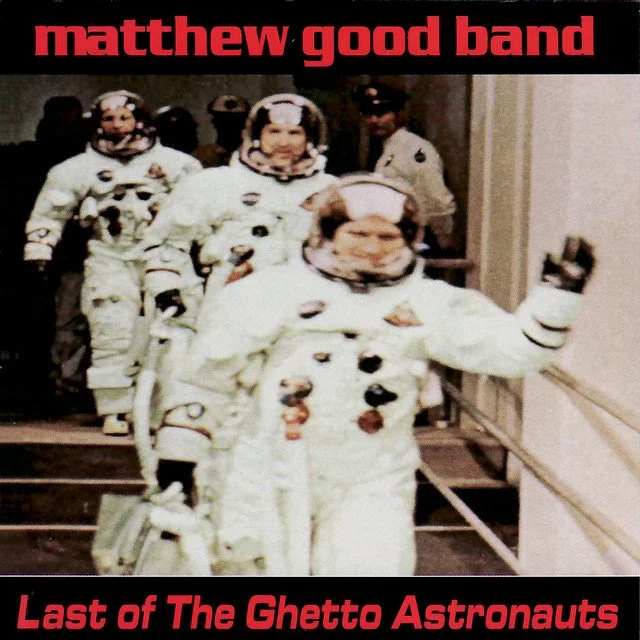
The new album 'Vancouver' now available in stores
and online. Check for upcoming shows in your area

Nothing New

Keeping the torch lit long after the games are over.

When will I get tired of it? Well, to answer that question – today.

There’s nothing to be done. I suppose protest is an option if you don’t mind doing it from the confines of a ‘free speech zone’, which is basically a contained area that’s been fenced off and is monitored by security cameras. On top of that, there’s the reality that protests within those zones will most assuredly be infiltrated by plain clothes RCMP operatives. In short: if it sounds like, feels like, and takes like it – it must be freedom.

But there’s nothing to be done. No matter Pivot’s ‘Red Tent’ initiative, or any other plan to point out the hypocrisy of the games, they’re going to happen. You can bitch all you’d like, even if you voting against them in the 2003 plebiscite, it doesn’t much matter now. Debt’s headed our way, and we’re going to be paying that debt off for many a year to come.

As soon as it’s over one wonders how fast focus on the realities of the Downtown Lower Eastside will evaporate? As was the case before the cost of the games became an issue, I’m willing to bet things will pretty much go back to the way they were – out of sight, out of mind. The gentrification of lower Gastown will continue, the neighbourhood’s problems will continue to be swept under the rug, and no one will really notice that funding to numerous projects has diminished or completely disappeared because, in the wake of the games, they simply can’t be sustained.

The question now is not what you plan to do while the games are on, it’s what you plan to do once they’re over. It’s all well and good to jump on the bandwagon, dawn a balaclava, and play dissident for a few weeks – it’s entirely something else to take it off and continue to be an advocate for responsible change after all’s said and done. It may not be as exciting and juvenile as chanting tired slogans from within the confines of a ‘free speech zone’, but confronting real challenges and seriously tackling uncomfortable problems never is. It’s difficult, frustrating, slow, and tiresome – excitement has little to do with it.

There is nothing to be done, at least not for the time being. But don’t forget, when the smoke clears and the numbers come tumbling in, there will be those that will have to be held to account. Doing so is of prime importance, as is remaining dedicated to confronting those disparaging issues that the Olympics have highlighted. If anything, a current has been provided with which to energize people regarding the failures of this Province’s government, this city’s terrible realities, and even our own shortcomings. If, when the world leaves, we can look in the mirror and remember that we’re not as self important as we think we are, then, perhaps, the road to change will see more feet upon it than it ever has.

post linesFebruary 7, 2010

Been busy, which is to say that I’ve had a piano and a guitar strapped to my back. Been scoring a lot of brass as well, which has been an enjoyable challenge.

2

Organized on social networking sites, there was a massive snowball fight that attracted hundreds in Washington DC yesterday to Dupont Circle where residents of the city’s North and South sides squared off. Maybe Congress should start using Twitter more, they might actually get something accomplished.

3

In Afghanistan, insurgent leaders have rejected the Afghan government’s latest offer of reconciliatory talks, most likely due to the fact that occupational forces are about to embark on the largest operation of the war – the assault on Marjah in Helmand (Operation Moshtarak). Home to some 80,000 people, Marjah has quickly turned into a ghost town as word of the impending attack has spread. Thousands of civilians have fled the area, though I doubt that they were alone in doing so. Attempting to repel a conventional assault on what NATO views as the insurgency’s last remaining stronghold in Helmand, the dictates of guerrilla warfare are quite clear – let them have it and vanish, be it across the border into Pakistan or into the throngs of civilians fleeing the area. Insurgents stand to gain nothing by defending the position, and being that there are most likely those among them with experience regarding the confrontation of conventionally superior forces, they would know that attempting to do so is pointless. Better to melt into the populace or the mountains while a counter-operation is launched against targets in the capital after the attack begins to remind NATO that the rules of the game haven’t changed. If a significant number of insurgents remain in Marjah and attempt to defend it I’ll be considerably surprised, as to do so would be counter to one of the fundamental pillars of modern guerrilla warfare – never fight an enemy head on. While some might claim that insurgents need to retain control of the town given its importance as an opium hub, and therefore a necessary element with regards to their financial sustainability, the truth of the matter is that manpower, not the protection of what is assuredly a lost cause, is of greater importance. True, a token few will remain and willingly give their lives, but only for the purpose of perception. The truth remains, while Operation Moshtarak might be a military success as far as NATO is concerned, and lauded over by the Western media, insurgents retain the ability to launch attacks at will against targets in the capital itself. And if they can drive a vehicle filled with explosives to within yards of NATO headquarters, as they have already done, then they can get to other symbolic targets of opportunity. As long as they have the ability to do so, time is on their side.

post linesFebruary 7, 2010

One of the arguments, if you can call it that, against comparing Olympic spending to social spending is that social problems would have to be dealt with no matter, and therefore the cost of the Olympics doesn’t factor into the reality of financially tackling them.

Despite being devoid of reason, arguing against that sort of assertion is a losing proposition because it includes talking about the Downtown Lower Eastside, and as soon as you include the neighbourhood in any conversation about the Olympics it automatically becomes a point of contention for those that, Olympics or not, view the problem as one that they shouldn’t have to deal with.

Bums, addicts, losers – nothing changes, so why bother. It’s the Vancouver mantra.

Rae went to the Abbotsford Salvation Army yesterday to talk to some people that have been displaced, many of whom talked about people being bused from the Lower Eastside out to the suburbs. She also took some pictures to document the experience, but before doing so contacted the Salvation Army to make them aware of what she was doing. Ultimately, she ended up on the phone with one of their local public relations people that told her that she was forbidden to talk to any of the people gathered outside. Not only that, when she informed them that her focus was the negative impact of the Olympics she was derided and aggressively lectured about the assured lucrative impact that the games would have.

This from the Salvation Army.

Despite the dressing down, she went anyway, spending the day talking to a variety of people and even helping one young man in trouble that suffered from mental illness that needed to get prescriptions filled – prescriptions for drugs no different than the ones that I take. A few days before he had been jumped and badly beaten, his face in a state of bruised and swollen disarray.

Real people, genuine and glad to talk about the situation. A young man that couldn’t believe that she would be so kind to actually give him a ride to a pharmacy. Another young man that insisted that he follow her most of the day to ensure her safety without her even asking. Human beings with feelings and opinions, no different than you or I.

For her the trip was the beginning of a journey, one in which she hopes to create a series of pieces highlighting the homeless problem in the Lower Mainland by using Olympic clothing as counterpoint to demonstrate a very simple point – that those that are largely ignored actually have valid opinions about what is transpiring, and that their voices need to be heard.

post linesFebruary 3, 2010

It would seem that the CIA’s recent private meetings with former Iraqi Vice President Izzat Ibrahim al-Douri, now the leader of the Ba’ath Party, have produced fruit. Having obviously reached terms, the Americans surely ventured behind closed doors on the other side of the fence to push for the reversal of the decision to ban some 500 candidates in the upcoming elections because of alleged Ba’athist ties. Of course, one can only speculate given various informational clues here and there.

No matter how it went down, the ban’s been lifted.

post linesFebruary 3, 2010

On September 4th of last year, US bombers were responsible for the deaths of 142 people. It has now emerged that the German-ordered attack was in contravention of NATO rules of engagement…

“SPIEGEL has learned that German commanders on the ground withheld important information from the US pilots above Kunduz — information which, had it been available, might have led to the pilots’ refusing to drop their payload.

One pilot, who goes by the handle Dude 15, told NATO investigators that, prior to the bombing, he had “an uneasy feeling about everything.” He and the pilot of a second F-15 flying over Kunduz that night both “could tell the ground commander was really pushing to go kinetic” — in other words, to bomb. He said they even considered breaking off the operation altogether.”

In other Afghanistan related news, despite US objections, the government of Hamid Karzai says that it plans to move forward with reconciliation talks with the leadership of the Taliban. Masoom Stanekzai, one of Karzai’s top advisors, was quoted as saying – “If they are willing to join the peace process, then why not?”

post linesFebruary 2, 2010

Human Books

Something's rotten in paradise.

Today’s fun fact: While hundreds of BC elementary and secondary schools have not been systemically upgraded, many of which are high risk, every Provincial building in the Province has been.

Today’s local story of note: Miro Cernetig’s piece – Olympic homeless pavilion feels contrived and dumbed down ran in yesterday’s edition of the Vancouver Sun. Some excerpts…

“Where things get totally strange, though, is at the back of the one-room pavilion. A large placard informs you a new library has been created at a nearby location for the Olympics.

But this is not a library of books. Rather what you get to check out, for 30 minutes at a time, is a real, live human being, one of many in a collection, from the Downtown Eastside. These “human books,” paid an honorarium for their services, will recite their stories about life in Vancouver’s ghetto.”

Cernetig’s reflection on the “human books” is rather accurate…

“Still, doesn’t a human library inevitably hark back to the last century, when explorers brought back human specimens as living museum exhibits?”

Cernetig then focuses on a very relevant truth regarding the majority of the city’s population and their disconnection from the realities of the DTLES…

“That’s what’s wrong with the homeless pavilion. It’s contrived and dumbed down. Nobody needs publicity shots of smiling politicians, pre-canned 200-word testimonials or human books to find out about life in the city’s poorest neighbourhood.

You just need to go outside.

The homeless and destitute still fill our streets. And they will be there in their unnatural habitat, whether you like it or not, for the world to see, during the Games.

[…]

“Inside the homeless pavilion, however, you will find no discussion of this political failure. Nor will you find any exhibits telling the ghetto’s ugly truths: HIV infection rates that rival those of the developing world, continuing reports of missing women and the psychological scars inflicted by Vancouver’s homegrown serial killer, Robert (Willie) Pickton.”

Nor will you find other, equally damning information, such as the fact that it’s the poorest urban neighbourhood in the country, that some 50% of police responses in the DTLES are to incidents involving the mentally ill, that this Province slowly dismantled its mental health care apparatus and shoveled a great many mentally ill individuals into that environment, that organized crime effortlessly controls the influx and sale of narcotics mere blocks from the city’s largest Police station virtually unchallenged, and that it remains the most concentrated poverty ghetto in all of North America.

“No, at its essence the homeless pavilion is what one expects from a government still dealing with a crisis: A public relations exercise. Its intent is to manage anyone who might leave the Olympic bubble and be shocked by the grinding poverty a few blocks from their luxury hotel.”

I have said it innumerable times in the past – but how Vancouverites can live with the shame of it is entirely beyond me. You’d never know it now, but there was a time when Yaletown was once a den of child prostitution (mostly young boys), replete with the drugs to keep them there. Its then abandoned and rat infested warehouses, now home to some of the city’s most upscale eateries and lounges, housed a culture of squatters and street kids. The answer at the time was progress. As if a massive rake were used to flounder its undesirables, it was transformed into Vancouver’s preeminent ‘urban utopia’, with little to no consideration given to the problems that were prevalent in it beforehand. Those problems simply moved location – a handful of blocks to the north, to the heart of the Downtown Lower Eastside.

Walk the streets of the DTLES now and you’ll notice the very same method being put into practice. High-end eateries, shops, and trendy coffee bars have popped up amidst its dour alleys, slum hotels, and dive bars. There are those that claim it progress, but the truth is that the problem will only be moved, not solved. East, down the Hastings corridor, the dispossessed will venture, and nothing will have been accomplished besides the gentrification of another urban neighbourhood for Vancouver’s ostriches.

Lastly, it shouldn’t be overlooked that The Vancouver Sun, in which Cernetig’s piece ran, is sponsoring the kiosk.

post linesFebruary 2, 2010

I would look to my left and there would be an explosion. He projected the sort of energy that I always imagined a natural bomb would – vibrant, pure, utterly oblivious to the perceptions of others and what they deemed cool. I struggled to match him, I fought to keep up some nights.

Our meeting was coincidental. One day he was working at the rehearsal space that I frequented, the next we were both rehearsing together in it. He once lived in workshop with his woodworking tools and slept on a piece of foam, brought a BMX bike on the road when we were on Edgefest that he would dismantle so that it could fit in the van after he used it, and following a band argument once got out at a gas station and starting walking down the highway in the middle of nowhere.

When he laughed, all of him laughed. When he cried, all of him did as well.

If time provides us the distance with which to make peace with our mistakes, it should also give us the grace to recognize when our ambitions got in the way of what was actually important. If anything, he was a victim of the latter. For when he left I was uncomfortably relieved, though years later would come to realize that he was, perhaps, the smartest of the four of us. He saw the rats in the corn before anyone else did and knew when best to make an exit. The band would go on to make its most popular record before imploding, but even given that, I never thought of it as ‘the band’ after he left, just an awkward, political dance between four people, the explosion to the left of me gone.

In the years that followed I would hear from him from time to time, mostly via email, and saw him last when I was making Hospital Music. He was then as affable and true to himself as he had always been.

In our youth we struggled to make sense of the tumultuousness inside of us. On countless stages, sometimes in front of literally no one, we would work to solve that puzzle a show at a time. After almost 16 years I still haven’t figured it out. I hope wherever he is that he has, and so is finally at peace.

post linesFebruary 1, 2010

The What Ifs…

What could we have done with all that money? Well...

Source material: Pete Mcmartin, Vancouver Sun.

Healthcare: The cost of the Olympics could have funded the construction of 6 state of the art hospitals to replace St. Paul’s.

Seismic Upgrades For Schools At Risk: The cost of the Olympics could have funded the entire budget of the seismic-upgrading program four times over for schools in British Columbia. As it stands now, only 32 out of hundreds of elementary and secondary schools have been upgraded as of last year.

Education: The cost of the Olympics could cover the four-year tuition fees of 345,383 UBC arts students – or 314,004 UBC science students – or 287,853 UBC engineering students – or 100,963 UBC medical students.

The cost of the Olympics could pay the salaries of UBC’s 587 full professors for 73 years.

The cost of the Olympics could cover the cost of educating every elementary and secondary student in the Province for roughly a year and a half.

Government: The cost of the Olympics could fund the Premier’s office for 500 years.

The cost of the Olympics could have paid the entire public service payroll of British Columbia for 2 years.

The cost of the Olympics could have allowed the Provincial government to waive property tax for 6 years and sales tax for over a year.

The cost of the Olympics could have funded all of the social welfare programs on the Lower Eastside – including food banks and social housing – that receive Federal, Provincial, and Municipal funding for more than 16 years.

The cost of the Olympics could have built roughly 20,000 units of social housing.

The cost of the Olympics could have afforded the city the ability to hire 3,000 new police officers and pay them, with full benefits, for 20 years.

Security: On average, every family in British Columbia will be paying $300 towards security costs during the games. Spread out over the country’s entire population of 34 million, every Canadian would be paying $26 dollars.

During the games, the military presence in Vancouver will be the largest since the Second World War.

The total cost of security is more than VANOC’s initial assessment of what the Olympics as a whole would cost.

$79 million dollars of the security budget is being used to house military and police personnel on three cruise ships.

Security costs include $29 million dollars for new computers and $6 million dollars for new radios.

BC Ferries will receive $15 million dollars for security upgrades even though no events are taking place on any of the coast islands to which they sail.

The Canada Border Services Agency is receiving $15 million dollars in supplemental funding.

The original security budget for the games was $175 million. It is currently hovering around the billion dollar mark.

post linesFebruary 1, 2010

Up the hill, outside the Salvation Army, those that have been trucked out of the downtown core now conglomerate in ever growing numbers. Homeless shelters out here have seen massive increases as well, as ‘preparations’ for the games shift into high gear.

post linesFebruary 1, 2010

I really don’t know what to say right now. Having just found out that Geoff has passed I’m still in a state of shock.

Geoff was one of the founding members of the Matthew Good Band, and, as far as I’m concerned, it was never quite the same without him.

I remember a lot of things when I think of Geoff. Like me, he suffered from extreme mood swings and depression, something that he struggled with throughout his life. But, to be honest, most of the time I just remember how funny and utterly selfless he was. There are a million stories, a million memories, and threading them together thousands of miles travelled. I wouldn’t change any of it for the world, and am honoured to have not only played with him, but to have had him be a part of my life.

On behalf of my entire family I would like to extend my deepest sympathies to Geoff’s wife and the Lloyd family.

For those of you in Vancouver, a fundraiser for Geoff’s widow is being held Sunday, February 7, 2010 at The Astoria. For more information, visit the Facebook page that has been created for the event.

post linesJanuary 31, 2010